
May 5, 2026
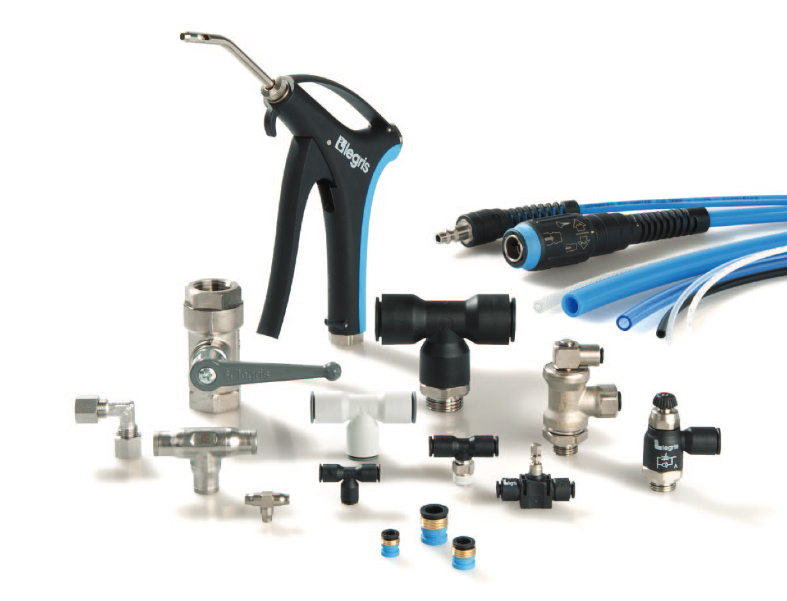
What couplings and hoses should I use for pneumatic systems?
The Importance of the Right Components
In a pneumatic system, compressed air is used to generate motion or force. Leaks, pressure loss, or incorrect connections can directly lead to a loss of performance or malfunctions. That is why it is essential to choose couplings and hoses that are perfectly suited to the application.Types of Pneumatic Hoses
There are various types of hoses, each with its own characteristics:1. Polyurethane (PU) hoses
PU hoses are flexible, kink-resistant, and ideal for dynamic applications such as robotics. They are lightweight and offer good wear resistance.
2. Polyamide (PA) hoses
These hoses are stiffer than PU hoses and can withstand higher pressures. They are often
used in industrial environments where durability is important.
3. Polyethylene (PE) hoses
PE hoses are cost-effective and suitable for simple applications involving lower
pressure and less movement.
4. PTFE hoses
For applications involving high temperatures or corrosive substances, PTFE hoses
are the best choice thanks to their chemical resistance.
Types of Couplings
In addition to hoses, couplings are just as important. They ensure a safe and leak-free connection.1. Push-in fittings
The most commonly used fittings in pneumatics. They allow for quick installation
without tools and are ideal for flexible systems.
2. Screw couplings
These provide a strong and durable connection, especially at higher pressures
or under vibration.
3. Quick Connectors
Useful when systems need to be frequently disconnected and reconnected,
such as during maintenance or for mobile installations.
What should you keep in mind?
When selecting hoses and couplings, several factors come into play:
- Working Pressure: Ensure that components are rated for the system's maximum pressure.
- Temperature: Not all materials can withstand high or low temperatures.
- Chemical resistance: Particularly important in the process industry.
- Bend radius: Essential in moving applications to prevent kinking.
- Ease of Installation: Installation and maintenance can save a significant amount of time.
Practical Tips
- Use components of the same quality at all times, and preferably from a single system supplier.
- Check regularly for wear, cracks, or leaks.
- Avoid excessive tension on hoses by routing and securing them properly.
- Choose color-coding to keep systems organized.
Conclusion
Choosing the right pneumatic couplings and hoses is not a minor detail, but a crucial factor in ensuring a system operates properly. By taking into account the application, environment, and technical specifications, you can prevent malfunctions and extend the service life of the system.
At Kuil Nicos , we Kuil Nicos happy Kuil Nicos with you to Kuil Nicos the right solution for your pneumatic application. Do you have any questions or would you like personalized advice? Please feel freeto contactus.